
A recent paper in The Lancet reports that liposuction results in more relief of leg pain and improvement in quality of life than conservative management forlipoedema. These findings help to provide more definitive evidence to support a treatment that patients have been requesting for some time, and the higher risk of serious adverse events that accompany it.
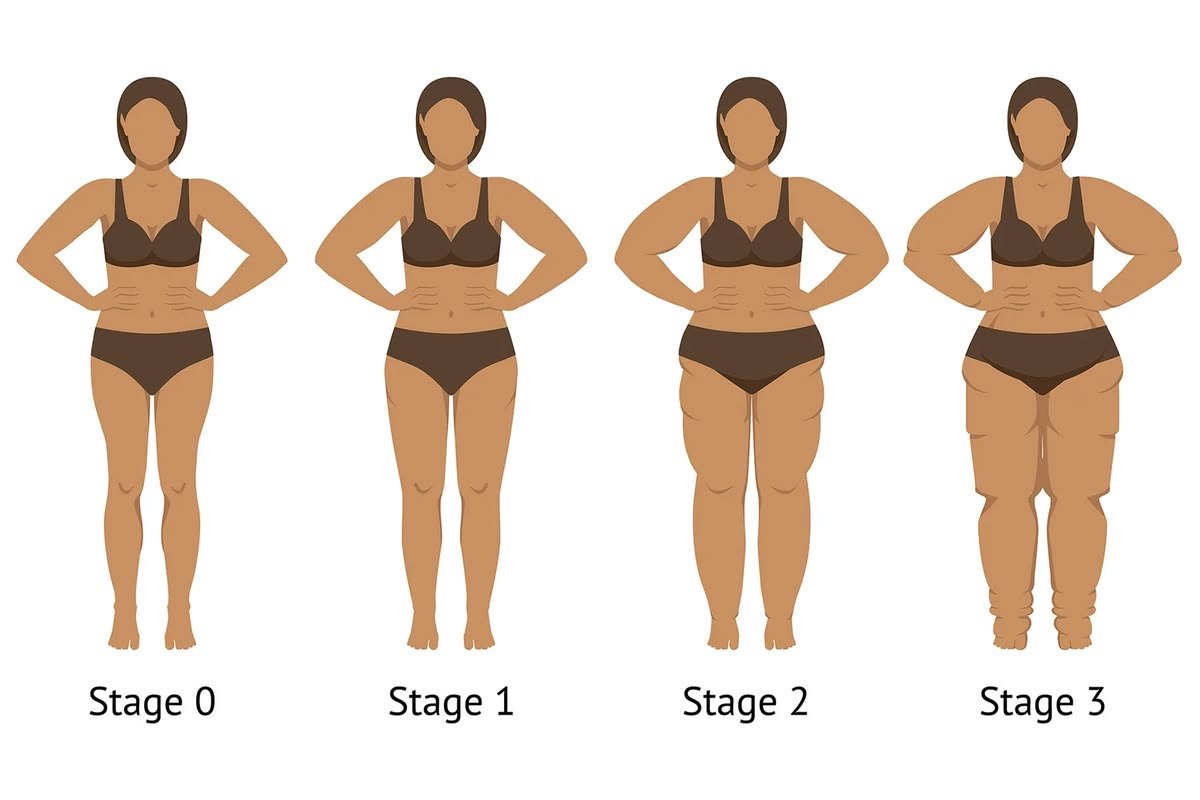
Lipoedema is a chronic disorder characterized by the abnormal deposit of fat tissue, predominantly in the legs, although there can be deposition in the arms also. The pattern of weight gain is disproportionate and the fat tissue is often tender and friable, having a tendency to bruise, and is painful, resulting in a feeling of heaviness in the affected limb which can severely restrict mobility.
Because of this in the past, conservative methods of treatment such as compression massage diet, and exercise were used as first line management. Yet, patients only experience partial or temporary remission of the condition. In the Lancet study, liposuction was directly compared to ongoing conservative treatment.
In the study, patients who received liposuction showed greater improvement in leg pain and overall quality of life. Those improvements were significant, not just statistically, but in the reality of daily existence, for those who have been suffering for so long with unexplained pain. Secondly, the paper did not portray surgery as completely without risk. Higher rates of severe adverse events occurred in the liposuction group. There are precautionary lessons to be learnt from this. This reminds us that all invasive therapy carries risk, and that yet promising the technique, it needs to be performed by experienced surgeons in suitable patients.
It does not advocate ending up on the operating table for everyone with lipoedema, rather it allows clinicians and their patients more comprehensive information for decision-making. The findings are timely, as recognition of lipoedema is gradually emerging. Although it was underdiagnosed for many yearssometimes assumed to be just obesity or lymphedema rather than a condition in itselfdifferentiating the disease is now facilitated by improved disease definitions and increased drive from patients. Though treatment options have not changed Really.
Without high level comparative evidence, many illinformed claims about treatment should be taken with a grain of salt by lady patients and their doctors in the meantime. Good quality research from a reputable publication is that means very welcome: in fact the quality of life measures in this trial recorded more than pain scores. Patients also reported improvements in physical function, emotional health, and normal activity levels.
These wider outcomes are important because lipoedema is about a lot more than looks. The pain and mobility effects of lipedema can impact on employment and relationships and mental health. Treatment that enhances those dimensions has value outside of the operating theatre. A reader of the study as a clinician would take away the importance of doing this based on an individual case by case basis. The disease stage, patient overall health, past performance and personal priorities all contribute to the right course of action for that individual. Given the high risk of complications, the balancing of risks and benefits, realistic preoperative expectations and long term care all should be part of the discussion.